



The aerospace industry requires a level of logistics infrastructure that goes far beyond conventional transportation. Moving aircraft engines, helicopters, and critical components depends on detailed technical planning, rigorous process control, and infrastructure designed to support highly complex operations.
DUX Logistics operates in this environment with a specialized aerospace logistics infrastructure developed to handle critical operations with maximum safety, predictability, and end-to-end operational control.
Specialized Infrastructure for Aircraft Engines and Aviation Components
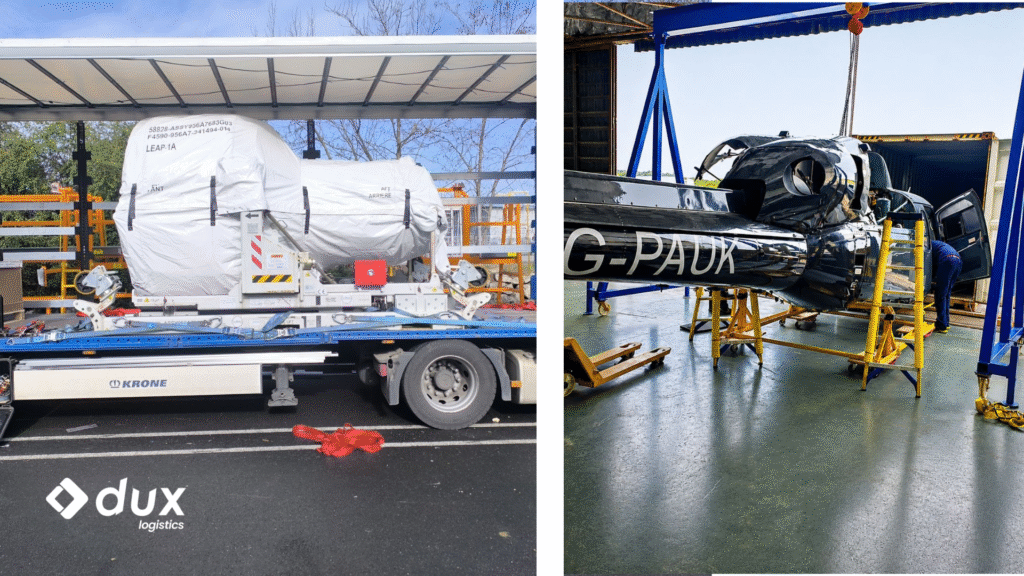
Aircraft engines and aviation components require a logistics structure that considers not only the value of the asset but also its operational sensitivity.
DUX Logistics’ specialized approach includes:
- Detailed technical planning before every operation;
- Customized packaging and protection for each type of cargo;
- Continuous integrity monitoring throughout transportation;
- Operational coordination from pickup through transit to final delivery.
This methodology minimizes operational risks and ensures that critical equipment reaches its destination in perfect condition.
Dedicated AOG Infrastructure with Immediate Response
In aviation, an AOG (Aircraft on Ground) situation represents one of the most critical logistics scenarios.
When an aircraft is grounded, every minute directly impacts operational costs and fleet availability.
DUX Logistics’ AOG infrastructure is designed for immediate response and includes:
- 24/7 rapid mobilization capability;
- End-to-end operational management of the incident;
- Continuous shipment monitoring throughout transit;
- Fast coordination between suppliers, carriers, and operators.
This structure ensures maximum responsiveness when time is the most critical factor.
Specialized Infrastructure for Helicopter Transportation
Transporting helicopters requires a logistics framework built on operational engineering and meticulous planning.
Each project is managed individually while considering factors such as:
- Aircraft dimensions and technical specifications;
- Partial or complete disassembly requirements;
- The most appropriate transportation mode;
- Regulatory and operational compliance requirements.
This structured approach ensures complete technical control throughout every stage while preserving the aircraft’s integrity during the entire transportation process.
Operational Infrastructure for Aerospace Cargo
Aerospace logistics requires robust infrastructure equipped with specialized equipment and procedures for handling sensitive cargo.
DUX Logistics maintains an operational structure that includes:
- Specialized equipment for handling sensitive aerospace cargo;
- Securing and packaging systems compliant with international standards;
- A fleet prepared for specialized transportation operations;
- Processes aligned with aerospace industry requirements.
This operational framework enables the execution of complex logistics projects with high predictability and effective risk management.
The Importance of Specialized Infrastructure in Aerospace Logistics
In the aerospace sector, having the right logistics infrastructure is not a competitive advantage—it is an operational necessity.
The absence of an adequate structure can directly impact safety, costs, and asset availability.
A specialized logistics infrastructure provides:
- Reduced operational risks for critical cargo;
- Greater reliability throughout logistics operations;
- Rapid response during emergency situations;
- Compliance with technical aerospace standards;
- Complete control over the logistics flow.
DUX Logistics: Specialized Expertise in Aerospace Logistics
DUX Logistics develops logistics solutions for the aerospace industry based on dedicated operational infrastructure, rigorously controlled processes, and rapid-response capabilities for critical operations.
Its services include the transportation of aircraft engines, aviation components, helicopters, and comprehensive support for AOG operations, always prioritizing safety, efficiency, and end-to-end logistics control.
More than simply transporting cargo, DUX Logistics provides the operational infrastructure required to support the aviation industry’s most complex logistics challenges.
Conclusion
Aerospace logistics requires specialized infrastructure capable of supporting critical operations with maximum safety and predictability. The transportation of aircraft engines, helicopters, and aviation components depends on thorough technical planning and carefully controlled execution throughout every stage of the process.
DUX Logistics delivers dedicated infrastructure for this market, supporting operations that demand the highest levels of reliability and operational precision.
Is your aircraft grounded? Contact the DUX Logistics AOG Desk today.
Frequently Asked Questions About AOG Logistics
What does AOG mean in aviation?
AOG stands for Aircraft on Ground, referring to a situation in which an aircraft is unable to operate due to a technical failure, the absence of a critical component, or a regulatory non-compliance issue. It represents the highest operational priority in both commercial and business aviation.
How does AOG logistics work?
AOG logistics relies on priority transportation, immediate response, and coordination among multiple stakeholders to deliver parts directly to the aircraft’s location within timelines measured in hours. The most commonly used solutions include Next Flight Out (NFO), Onboard Courier (Hand Carry), and dedicated charter flights.
Who provides AOG logistics services in Brazil?
Specialized international critical logistics providers, such as DUX Logistics, perform complete AOG operations throughout Brazil, including international transportation, emergency customs clearance, and final delivery. DUX’s Authorized Economic Operator (AEO) certification provides a significant operational advantage for urgent imports.
What is the difference between AOG logistics and conventional freight?
With conventional freight, delivery schedules are planned in advance and cost is the primary consideration. In AOG logistics, speed is the top priority, operations run 24/7, and cost becomes secondary to restoring aircraft availability as quickly as possible. The operational structure, transportation methods, and specialized teams involved are entirely different.
What is Next Flight Out (NFO) in aerospace logistics?
Next Flight Out (NFO) is a transportation solution in which cargo is booked on the first available flight with sufficient capacity, regardless of the airline. It is widely used in AOG operations because it offers an excellent balance between speed and cost compared to dedicated charter services.
What is an Onboard Courier in AOG operations?
An Onboard Courier (OBC), also known as Hand Carry, involves a dedicated courier personally transporting aviation parts as carry-on baggage. This solution is used when the component is compact, extremely critical, and delivery deadlines do not allow waiting for available space on standard cargo flights.